You are hereresearch / Technology
Technology
overlooked at AAM: the MUSE awards announced
The MUSE awards were announced at AAM this week, and the list represents an interesting overview of museum technology activity.
Here's a project that wasn't recognised [something that surprised me a bit]: The milti-touch tables at the Denver Art Museum.
exhibition:editor 3D
On Friday, 11th April, I held a mini-workshop together with Otmar Moritsch. We were showing how to use a software tool to create three-dimensional exhibitions.
Some of the audience were interested in the web site, so I thought I could use this way to give you the URL. Also comments of any kind are very much appreciated!
The website: http://www.exhibition3d.at
You will also have the possibility to download a demoversion of the tool!
Nonprofit IT Staffing: Budgets, Salaries, Training and Planning; a new report
 The second part of the Nonprofit Technology Network (NTEN) report on information technology in Not for Profits is now available. Nonprofit IT Staffing: Budgets, Salaries, Training and Planning reports the results of a USA national survey.
Findings of the second Nonprofit IT Staffing Report include:
New Report: Nonprofit IT Staffing: Staffing Levels, Recruiting, Retention, and Outsourcing
 There's a new report out from NTEN and the Nonprofit Times about IT staffing in Not for Profits. Download the report
Highlights from the Executive Summary:
- On average, nonprofits employ one IT staff member for every 18 employees.
- Most nonprofits continue to feel understaffed when it comes to IT. Size of organization did not seem
to impact staffing satisfaction.
- IT staff spend their time in much the same way, regardless of organization size or level of technology adoption. For the second year, the largest percentage of staff time, roughly 40%, is spent on desktop and application support.
- The average tenure for IT staff at nonprofits is 4.3 years. Tenures were longer for larger organizations and organizations that felt they had greater technology adoption.
- Almost all nonprofits outsource at least some technology tasks; more technical tasks continue to be
more commonly outsourced.
There are reports coming on Salaries & Budgets and IT Management & Planning based on the same survey
Amsterdam Museums go Mobile
From museumlab.org:
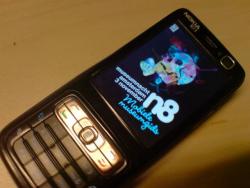
KPN Mobile Museum Guide
Readers of this blog have seen a recent surge in news on the Amsterdam Museum Night. The latest instalment in this series is the KPN Mobile Museum Guide. Visitors of the Museum Night can text 'n8' to 4628 to receive the complete program on their mobile phone. The Mobile Museum Guide includes an interactive map of Amsterdam with all the museums, the n8 blog, nachtgeluiden, a quiz and an interactive tour with Blue Tooth, designed for the Amsterdam City Archives.
In the future, the n8 intends to build upon the current infrastructure to launch more services, such as streaming audio and video, mapping and tagging. The Mobile Museum Guide was launched on 24 October. The Amsterdam Museum Night will take place on Saturday 3 November.
Any Twits at MATW?
Hey so will any of us museum web nerds be Twitter-ing during the conference?
Yahoo Pipes - what's it all about?
Before my workshop I'm looking at how Yahoo Pipes works. Is there anyone at MW 07 who has used this interesting new setup?
Museums and Technology Workshop at CAJM, Toronto
 David and I gave a workshop yesterday on 'Museums and Technology' for the Council of American Jewish Museums (CAJM). It was a last minute favour for a friend, that provided a chance to think about strategies for approaching technology choices.
The future of museums
In November I undertook a project with the Canadian Heritage Information Network to explore potential future information technologies and their implications for museums. First I identified 25 technological scenarios based on technologies that already exist, at least in the laboratory. Then we asked a number of experts who would help to predict when, if ever, these technologies would be widespread within North America. Subsequently, we held a session with museum professionals, consultants, students and educators to explore how these technolgies might be used in museums and imagine their transformative potential. The process is continuing this month with the writing of a number of 'vignettes' that depict new realities in which the museum might find itself in the coming years and the response to these vignettes by second year Museum Studies students who are looking at their current plans for an exhibit in 2007 and how these might change in light of tgechnological opportunities envisioned for 2013.
The experts predicted that within six years, most North American museums clients (though of course the statements say "Canadian" since the study was funded by CHIN) will consider it commonplace to:
Barry Wellman on the "Internet and Everyday Life": people who talk, talk!
Barry Wellman spoke last night at the University of Toronto about his ongoing research into the 'Internet in Everyday Life'. It was an interesting, but somehow dissatisfying presentation of some significant research into the role of communications technologies in maintaining social ties. If that doesn't sound like the 'Internet' to you, it's because it isn't.
Though Wellman casts his net widely, and talks about researching the Internet as a whole, his work focuses on e-mail (which when the first of these studies was conducted was the major source of traffic on the net). The most interesting set of statistics presented last night were about the inter-relationships between the use of fixed phones, mobile phones, email and SMS and how their use breaks down across type of social ties, and the distance between communicants. He found a group of people who are very heavy communicators, high users of all types of media. Communications technologies enable communication. Wow.

upgrade to drupal 4.7
i'm doing the drupal upgrade from 4.6 to 4.7. sorry in advance if you encounter strange behaviour. please let me know if things aren't working, or if there are changes and enhancements you'd like to see.
there are a number of new features i'd like to deploy (including better menus) and i'll post notes here as i notice things that change.
/jt

flickr badge + other uses
Hello Jennifer,
Thank you again for a memorable and useful conference. I came back with so many ideas that my staff is hiding whenever I head to their offices.
We're inspired by the flickr pools and see some interesting applications for it in our website. Can you tell me what code was used to create the flickr thumbnail collage on the right hand nav of conference.archimuse.com?
Thanks!
Rose
Work of Art Microformat
Hi All,
We're developing an xhtml markup standard for the presentation of works of art on the web, based on existing XML schema.
I've initiated exploratory discussions on the microformats.org wiki at:
http://microformats.org/wiki/work-of-art
I'm sure a lot of you have thoughts about how best to use semantic markup to present artworks. What class names do you usually use? What is the structure of the "object information" page on your website? What metadata schema do your museums use behind the scenes?
Research Forum: Technology
Technology issues in museums and the web research include:
- How well are existing tools and methods serving digital museum users? Do we need virtual museum evaluations to determine:
- Are educational sites useful to teachers, students and free choice learners?
- Can researchers effectively locate information about any given topic?
- Do exhibition and content database creators have sufficient technology tools for their tasks?
- How can technology and tools be improvded to provide access to museum information? Focus qestions include:
- How can the visibility of on-line museum resoures be improved?
- How can the museum community provide better service for information seekers? including
- integrating access to multiple museum resources
- support for image-based retrieval